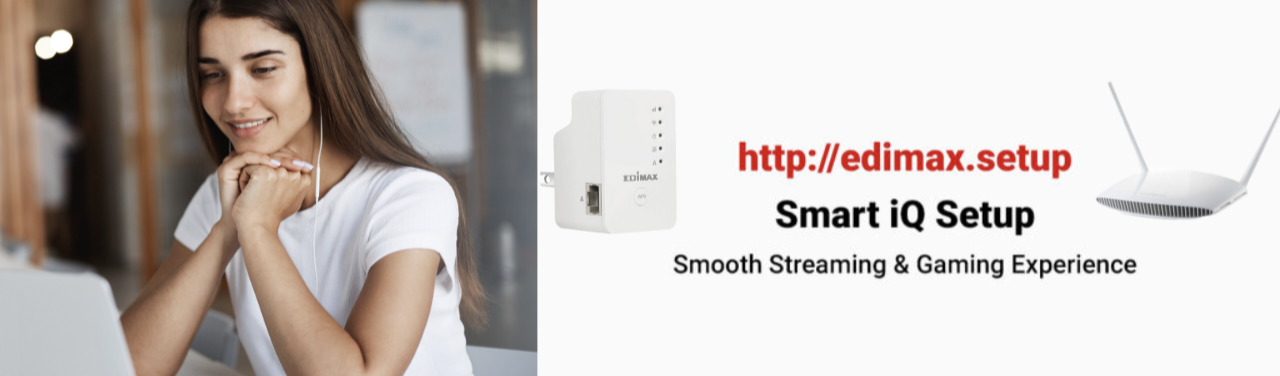
How to Extend Range with an Edimax Wi-Fi Extender
A weak wireless signal can make ordinary online tasks frustrating. Pages load slowly, video calls freeze, and smart home devices may disconnect whenever they are placed too far from the main router. An Edimax Wi-Fi extender can improve coverage by receiving the existing network and rebroadcasting it into areas where the signal is unreliable.
The extender does not create a separate internet connection. Instead, it bridges the gap between the primary router and distant devices. Its performance depends on placement, wireless settings, firmware, and the quality of the signal it receives from the router.
A successful installation therefore involves more than plugging the unit into the wall. You need to choose a suitable location, connect it to the correct wireless network, confirm its operating mode, and test the result in the areas that previously had poor coverage.
Choose a suitable location
The best position is usually halfway between the main router and the room with weak coverage. The extender must still receive a reasonably strong signal from the router, because it can only repeat the connection it gets. Placing it in a dead zone often produces a weak extended network rather than solving the problem.
Start by testing the router’s signal near the intended position with a phone or laptop. A location where browsing works reliably is generally better than one where the device connects only intermittently. Avoid putting the extender behind large appliances, inside cabinets, on the floor, or next to thick concrete or metal surfaces.
Height can also affect coverage. A shelf or open side table is often more effective than a low outlet hidden behind furniture. Keep the unit away from cordless phone bases, microwave ovens, Bluetooth hubs, and other electronics that may create interference in the 2.4 GHz band.
Prepare the router and extender
Before beginning, identify the main router’s wireless network name and password. Check whether the password uses uppercase letters, numbers, or special characters, and enter it exactly during setup. A single extra space or incorrect character can prevent the Edimax extender from joining the network.
Plug the extender into a nearby outlet for the initial installation. Connecting it close to the router makes WPS pairing easier and gives you access to the device if browser-based setup is required. After configuration is complete, move it to the selected coverage point and wait for its status indicators to settle.
If the extender has been used with another network, reset it before starting again. The reset procedure varies by model, but it commonly involves holding a recessed button for several seconds while the device is powered on. A reset removes old wireless profiles and prevents previous settings from interfering with the new installation.
Check the labels on the device for its default network name, setup address, or login details. Some Edimax models use a dedicated setup SSID, while others may present a web interface through a local IP address. The model’s quick-start guide remains the best source for exact indicator meanings and reset timing.
Pair the extender with WPS
WPS is usually the quickest installation method when the primary router supports it. Press the WPS button on the router, then press the WPS button on the Edimax extender within the time specified by the device instructions. The units exchange the wireless security information automatically.
The indicator light may blink while pairing is in progress. Wait until it becomes steady or changes to the connected status shown in the manual. Interrupting power during this period can leave the extender partially configured, requiring a reset before another attempt.
Once pairing succeeds, the extender may copy the router’s network name or add a suffix to it. Some models display a separate extended SSID, while others use the same name to support more seamless roaming. Record the visible network names so you know which signal your phone or computer is using during testing.
WPS is convenient, but it may fail when the router has WPS disabled, when the two devices are too far apart, or when wireless security settings are incompatible. If the status light indicates failure, move the extender closer to the router and try once more. Repeated failures are a sign that browser-based configuration may be the better option.
Configure settings through a browser
Manual setup gives you more control over the SSID, password, operating mode, and wireless band. Connect a phone or computer to the extender’s temporary wireless network, or connect by Ethernet if the model provides a LAN port. Then open a browser and enter the setup address printed in the documentation.
The address may be a local hostname or a default IP address such as one assigned by the device during installation. Make sure the computer is connected to the extender rather than using mobile data or a different household network. If the setup page does not load, disconnect from virtual private networks and check that the device has finished booting.
Follow the on-screen wizard to scan for nearby networks. Select the main Edimax router’s SSID, enter the wireless password, and choose whether the extended network should use a separate name. A separate name makes testing easier because you can clearly identify the repeater’s signal. Matching names can be more convenient when moving around the home, but roaming behavior depends on the client device.
For a detailed walkthrough of connecting an Edimax unit through its web interface, use this browser setup guide. It can help clarify the sequence of accessing the setup page, selecting the source network, and saving the wireless configuration.
| Setup method | Best for | Main advantage | Common limitation |
|---|---|---|---|
| WPS pairing | Quick home installation | Copies compatible wireless settings automatically | Requires WPS support and close proximity |
| Browser configuration | Manual control and troubleshooting | Allows SSID, password, and mode selection | Requires access to the setup interface |
| Ethernet-assisted setup | Difficult wireless pairing | Provides a stable connection during configuration | Requires a suitable cable and port |
| Access-point mode | Homes with Ethernet cabling | Often delivers stronger performance than repeating | Requires a network cable to the extender |
After saving the settings, the extender may restart. Wait several minutes before trying to connect to the new wireless network. If the setup page reports an invalid password or cannot find the router, repeat the scan and verify that the source SSID is the correct one, especially in apartments with many similarly named networks.
Select the right operating mode
A wireless repeater or range extender mode receives the router’s Wi-Fi signal and sends it onward. This is useful when running Ethernet cable is impractical. It is simple to deploy, but the wireless link between the router and extender shares airtime with traffic going to connected devices.
Access-point mode uses an Ethernet cable between the router and Edimax unit. The extender then creates Wi-Fi from that wired connection instead of relaying the router’s signal over the air. This usually provides better throughput, lower latency, and greater stability, making it preferable when cabling is available.
Router mode is designed for situations where the Edimax device itself performs routing and network management. It is generally unnecessary when the main household router already handles these functions. Using multiple routers without careful configuration can create double NAT, separate subnets, and problems with printers, game consoles, or local file sharing.
Choose the mode that matches the physical layout and network design. For a detached room with an existing Ethernet run, access-point mode may outperform wireless repeating. For a rental property or temporary installation, repeater mode may be more practical because it requires no new cable.
Tune the wireless connection
After installation, walk through the areas that previously had poor coverage. Check web browsing, streaming, video calls, and any devices that depend on a stable connection. Do not judge the result solely from the signal bars; a strong connection to the extender is useful only if the extender also maintains a good link to the router.
The 2.4 GHz band usually travels farther and passes through walls more effectively, while 5 GHz can provide higher speeds over shorter distances. If the Edimax model supports both bands, use 2.4 GHz for distant rooms and consider 5 GHz for nearby devices that need greater capacity.
Wireless channel congestion can reduce performance in busy neighborhoods. Automatic channel selection is a reasonable starting point, but a crowded channel may require manual adjustment. On 2.4 GHz, channels 1, 6, and 11 are commonly preferred because they do not overlap with one another. Available settings depend on the router, regional rules, and the Edimax model.
Use these practical checks when positioning and tuning the extender:
- Keep the unit in an open, elevated location with a dependable router signal.
- Place it close enough to the main router to preserve a strong backhaul connection.
- Use a distinct extended SSID during testing if you need to identify the active access point.
- Prefer access-point mode when an Ethernet connection is available.
- Test performance at different times because neighboring networks can increase interference.
Avoid adding several extenders in a chain unless the equipment specifically supports a suitable mesh or daisy-chain design. Each additional wireless hop can reduce throughput and increase delay. A single well-positioned unit is often more effective than multiple devices placed at the edge of coverage.
Keep the extended network reliable
Once the extender is working, update its firmware when the manufacturer provides a compatible release. Firmware updates can address security issues, improve compatibility, and correct stability problems. Download updates only from a trusted Edimax support source and avoid interrupting power while an update is being installed.
Change any default administrator password used to access the setup interface. The wireless password and the administration password serve different purposes, so using separate credentials improves security. Keep wireless encryption set to the strongest option supported by both the router and extender, such as WPA2 or WPA3 where available.
If the network becomes unreliable, restart the extender and inspect its status light. A slow or unstable connection may indicate that the unit has been moved too far from the router, the source password changed, or the router has switched wireless settings. Re-entering the configuration may be necessary after a router replacement or factory reset.
Performance should also be measured from the locations where people actually use the network. A speed test beside the router says little about coverage in a bedroom, garage, or upstairs office. Compare the result before and after installation, and test several devices because older phones and laptops may support fewer wireless standards.
When the Edimax extender is positioned within reliable range, configured with the correct source network, and operated in the appropriate mode, it can eliminate many household dead zones. Begin with WPS for a quick pairing, use the browser interface when you need detailed control, and make placement the central part of the installation. Configure the device carefully, test every target room, and adjust its position until the extended Wi-Fi delivers a stable connection where it matters.