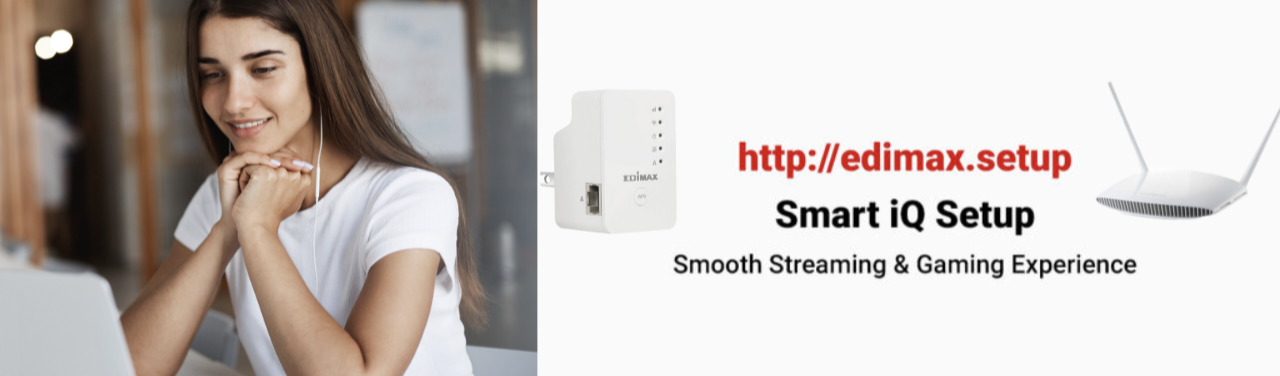
How to connect an Edimax extender to a dual-band router
An Edimax Wi-Fi extender can improve coverage in rooms where the signal from a dual-band router becomes weak. The extender receives the existing wireless connection and rebroadcasts it, allowing phones, laptops, smart TVs, and other devices to connect from a greater distance.
Dual-band networking usually provides two wireless frequencies: 2.4 GHz and 5 GHz. The 2.4 GHz band travels farther and passes through walls more effectively, while 5 GHz often delivers faster speeds at shorter distances. When the extender is paired correctly, it can use one or both bands according to the model and network configuration.
The installation can be completed with WPS or through a browser-based setup page. WPS is usually faster, while manual configuration provides greater control over wireless names, passwords, security settings, and the frequency band used for the connection between the router and extender.
Check compatibility before installation
Start by confirming that the Edimax extender supports the wireless standards and frequency bands used by the router. A dual-band extender is the best match for a router broadcasting both 2.4 GHz and 5 GHz networks. A single-band Edimax model may still work, but it will connect through only one frequency and may not provide the same performance.
Find the model number on the extender’s label or packaging, then review its quick installation guide if available. Some Edimax devices use separate network names for each band, while others combine them under a single name. The setup process can also vary between hardware revisions, so the labels shown on the device may differ slightly from online instructions.
Place the extender in the same room as the router during initial setup. A nearby position helps WPS pairing and prevents an unstable signal from interrupting configuration. After installation, move it to a location between the router and the area with poor coverage rather than placing it directly inside the dead zone.
Before beginning, record the router’s wireless name and password. If the router uses separate names, note both SSIDs and identify which one belongs to the 2.4 GHz band and which belongs to 5 GHz. This information will be required if the extender uses a browser-based installation method.
Prepare the router and extender
Connect the router to the internet and allow it to complete startup. Confirm that wireless devices can access the network before adding the extender. Troubleshooting a router and extender at the same time can make it difficult to identify the source of a connection problem.
Plug the Edimax extender into an electrical outlet close to the router. Wait until its power indicator becomes stable. Avoid connecting it through a power strip with an on/off switch that could be accidentally disabled during installation.
If the extender has previously been configured, reset it before starting a new installation. The reset button is commonly recessed and may need to be held with a pin for several seconds. The exact reset time varies, so use the device’s guide where possible. Resetting removes old network details and returns the unit to its default setup state.
Check that the router’s wireless security is compatible with the extender. WPA2-Personal with AES encryption is widely supported. Very old security modes, hidden SSIDs, access-control lists, or unusual wireless channels can interfere with pairing. Temporarily disabling MAC filtering may help during setup if the router is configured to reject unknown devices.
Pair the devices with WPS
WPS provides the simplest way to connect many Edimax extenders to a dual-band router. Press the WPS button on the router, then press the WPS button on the extender within the time specified by the device. On some models, the button must be held briefly rather than tapped.
The wireless status light should blink while the extender searches for the router. Pairing may take a minute or two. When the connection succeeds, the indicator generally becomes solid or changes color. If the router has separate 2.4 GHz and 5 GHz WPS processes, the extender may connect to both automatically, or it may require a second WPS operation.
Keep the devices close together during this stage. A failed WPS connection does not necessarily mean the equipment is incompatible. Common causes include pressing the buttons too far apart in time, using a router with WPS disabled, or attempting to pair while the extender is still booting.
After pairing, look for the extended network name on a phone or computer. Edimax extenders may append a suffix to the original SSID, such as “_EXT,” while some models copy the router’s name. Connect using the original wireless password unless the installation process created a separate password.
Configure the extender through a browser
Manual installation is useful when WPS is unavailable or when you want to decide exactly how each wireless band operates. Connect a computer or mobile device to the extender’s temporary Wi-Fi network, or connect to it with an Ethernet cable if the model provides a LAN port.
Open a web browser and enter the setup address printed in the Edimax documentation. Depending on the model, this may be an Edimax setup hostname or a default local IP address. If the page does not load, check that the device is connected to the extender rather than the main router, then try the listed default address.
The configuration wizard normally scans for nearby wireless networks. Select the router’s 2.4 GHz network, 5 GHz network, or both when the option is available. Enter the wireless password carefully, paying attention to capitalization and spaces. A password mismatch is one of the most frequent reasons an extender appears connected but cannot reach the internet.
The wizard may allow separate extended SSIDs and passwords. Keeping a recognizable suffix can make it easier to identify whether a device is connected to the extender. Alternatively, using the same SSID and security settings as the router can provide a more seamless experience, although clients decide when to roam and may remain attached to a weaker signal.
| Setup choice | Best use | Main benefit | Important limitation |
|---|---|---|---|
| 2.4 GHz connection | Long range and multiple walls | Better coverage | Lower speed and more interference |
| 5 GHz connection | Shorter distance and high bandwidth | Faster local performance | Signal weakens more quickly |
| Both frequency bands | Mixed household devices | Flexible connectivity | More settings to manage |
| Same SSID as router | Simple home roaming | One familiar network name | Devices may not switch promptly |
| Separate extender SSID | Testing and manual control | Easy to identify the active link | Requires selecting networks manually |
| WPS setup | Quick standard installation | Minimal typing | Less control over advanced settings |
| Browser setup | Custom wireless configuration | Detailed control | Requires the correct setup address |
Once the wizard finishes, save the settings and wait for the extender to restart. Do not unplug it while the configuration is being written. If the device offers an option for operating mode, choose range extender or repeater mode when the goal is to expand an existing Wi-Fi network. Access point mode is different: it normally uses an Ethernet cable from the router to create wireless coverage at the extender’s location. Review this access point mode guide if a wired installation is more suitable.
Choose the right placement and band
After the Edimax extender connects successfully, move it to an outlet roughly halfway between the router and the area requiring stronger coverage. It must still receive a reliable signal from the router. Installing it at the far edge of the dead zone gives the extender little usable bandwidth to repeat.
Use the indicator lights as a general guide. A strong or acceptable signal typically means the extender is close enough to the router, while a red or weak indication suggests that it should be moved nearer. The ideal location may be a hallway, landing, or open room with fewer walls between the two devices.
The 2.4 GHz band is usually preferable when the priority is reaching a distant bedroom, garage, or upper floor. It is more resistant to distance and obstacles, but neighboring networks, Bluetooth devices, microwaves, and older equipment can create interference. Changing to a less congested channel on the router may help when the 2.4 GHz connection is inconsistent.
Choose 5 GHz for nearby streaming devices, gaming systems, or computers that need higher throughput. The extender’s 5 GHz backhaul—the wireless link between the router and extender—can improve performance when the units are relatively close. If the router and extender are separated by several thick walls, 2.4 GHz may provide a steadier result even when its maximum speed is lower.
Test performance and resolve connection issues
Connect a device near the extender and check whether it receives an IP address from the router. Open several websites, stream a short video, or run a speed test at different points in the home. Compare the result with a test performed next to the router. An extender will usually provide less speed than a direct router connection because wireless traffic must travel between the router and the extender before reaching the client.
If the extended network is visible but has no internet access, revisit the router password and confirm that the extender is linked to the correct SSID. Reboot both devices, beginning with the router and then restarting the extender after the router is fully online. A firmware update may also resolve compatibility problems, but install it only through the manufacturer’s documented process.
If WPS fails repeatedly, use manual browser setup instead. Confirm that WPS is enabled on the router, remove any temporary wireless restrictions, and reset the extender before trying again. Avoid pressing WPS buttons on several nearby devices, since the extender could attempt to pair with the wrong access point.
Slow speeds often result from poor placement rather than a failed installation. Move the extender closer to the router, reduce obstructions, and test each frequency separately. If many networks use the same channel, select a less crowded channel on the router where the router permits manual channel selection.
Practical setup recommendations
A few deliberate choices can make the extended network more stable and easier to manage:
- Use the same wireless security standard and password strength on the router and extender.
- Keep the extender away from cordless phone bases, Bluetooth hubs, metal cabinets, thick masonry, and large appliances.
- Give the extended network a clear name during testing so you can identify which access point serves each device.
- Reserve a fixed location only after checking signal strength and real-world speed in the target room.
- Update the router and extender firmware when an official release addresses security, stability, or compatibility issues.
Treat the extender as part of the home network rather than as an independent internet connection. Its management page may be reachable through the router’s client list after setup, but the exact address can change. Record the administrator credentials securely and avoid leaving the default password in place.
For larger homes or networks with heavy streaming traffic, a wired access point or mesh system may perform better than a wireless repeater. A wireless extender is most effective when it solves a specific coverage gap and has a clear, strong path back to the primary router.
Follow the Edimax model instructions, pair the extender near the router, and test both frequency bands before fixing its final position. A careful installation gives each device a reliable route to the router and helps maintain stable Wi-Fi throughout the areas that previously had weak coverage.